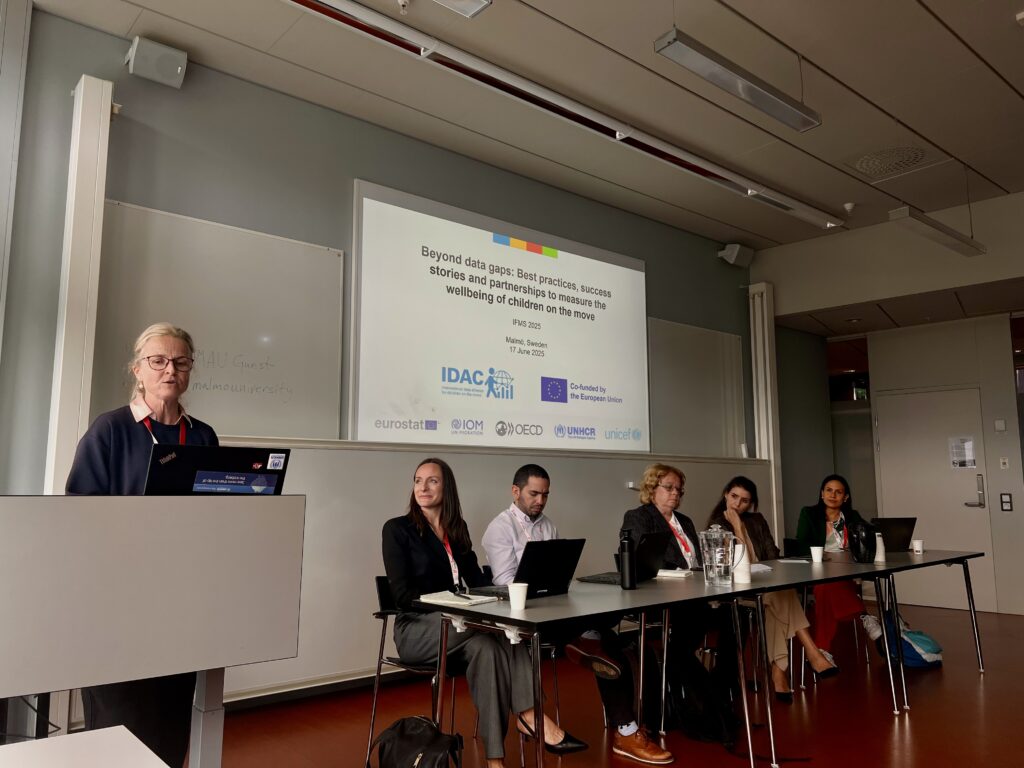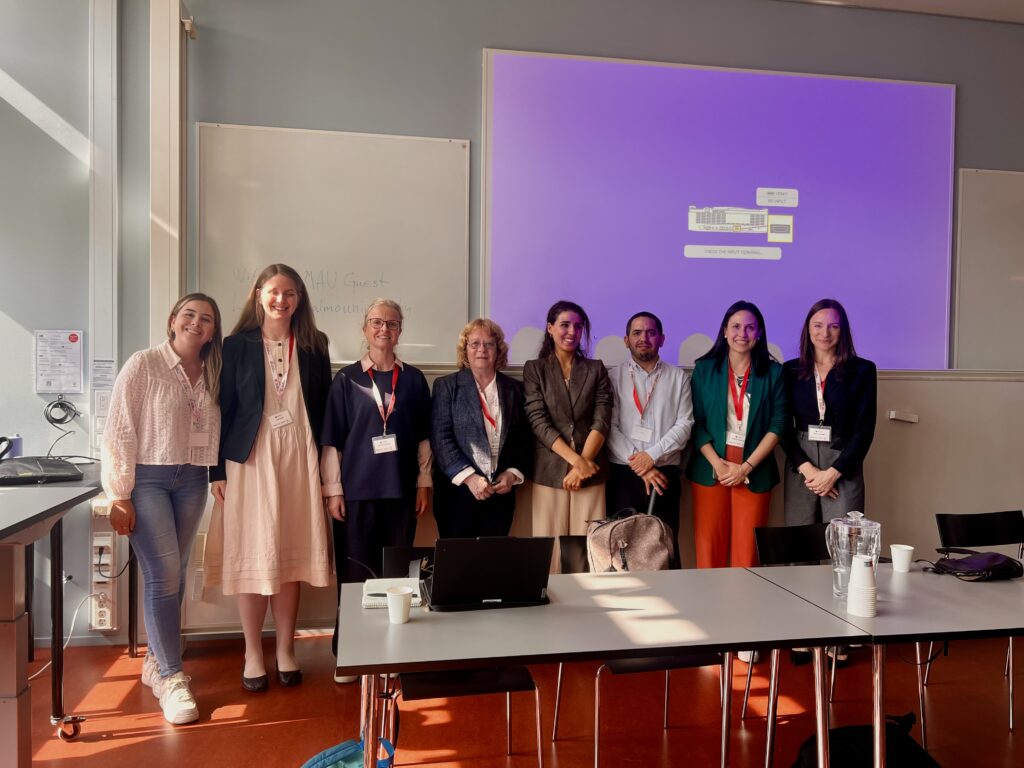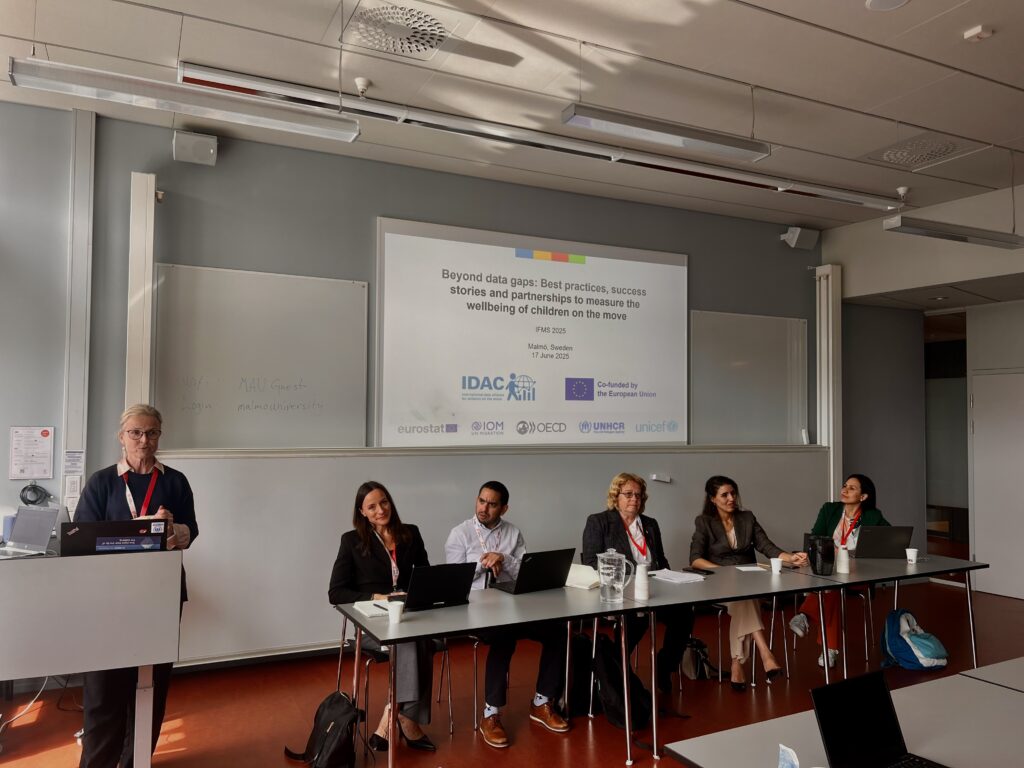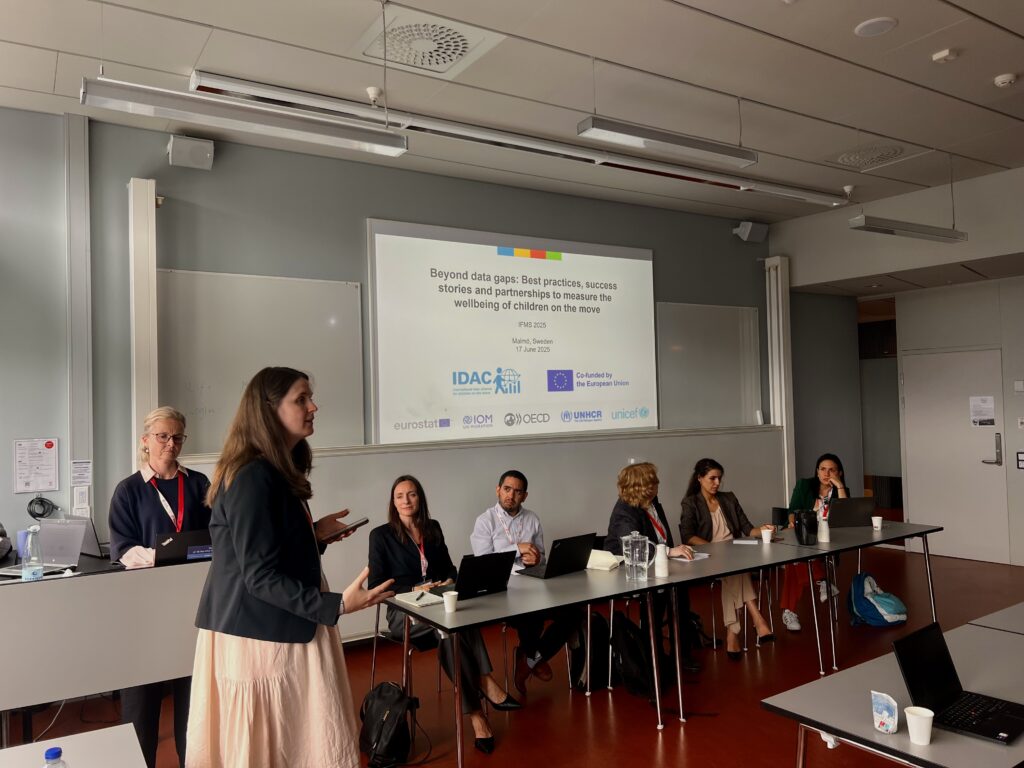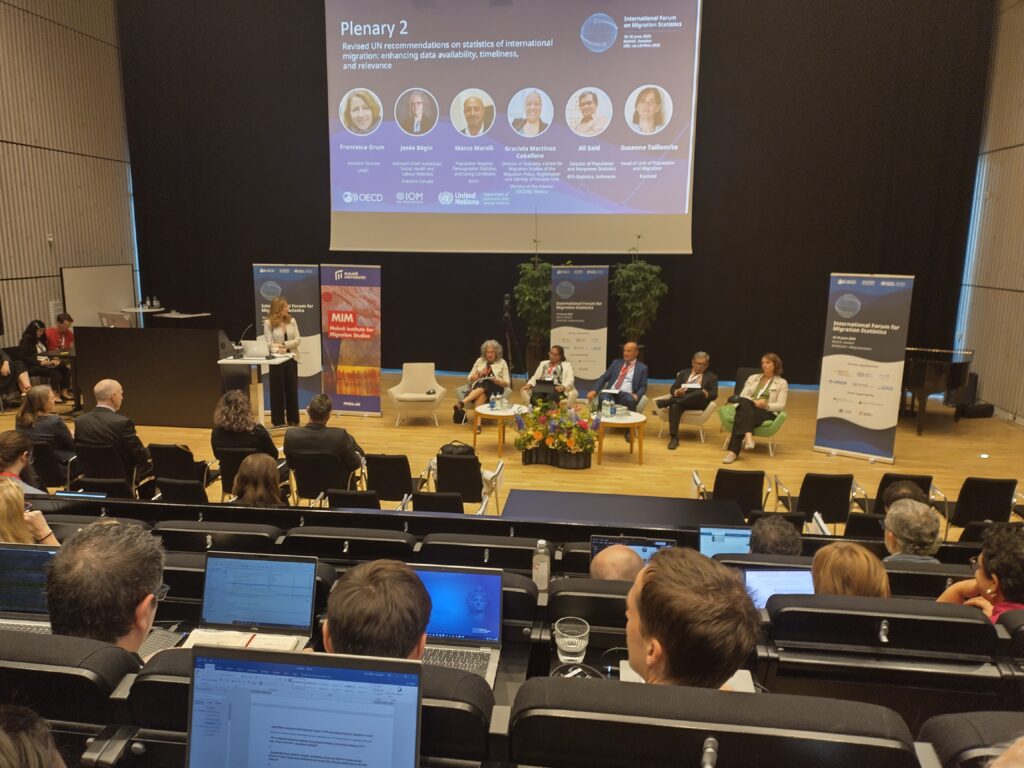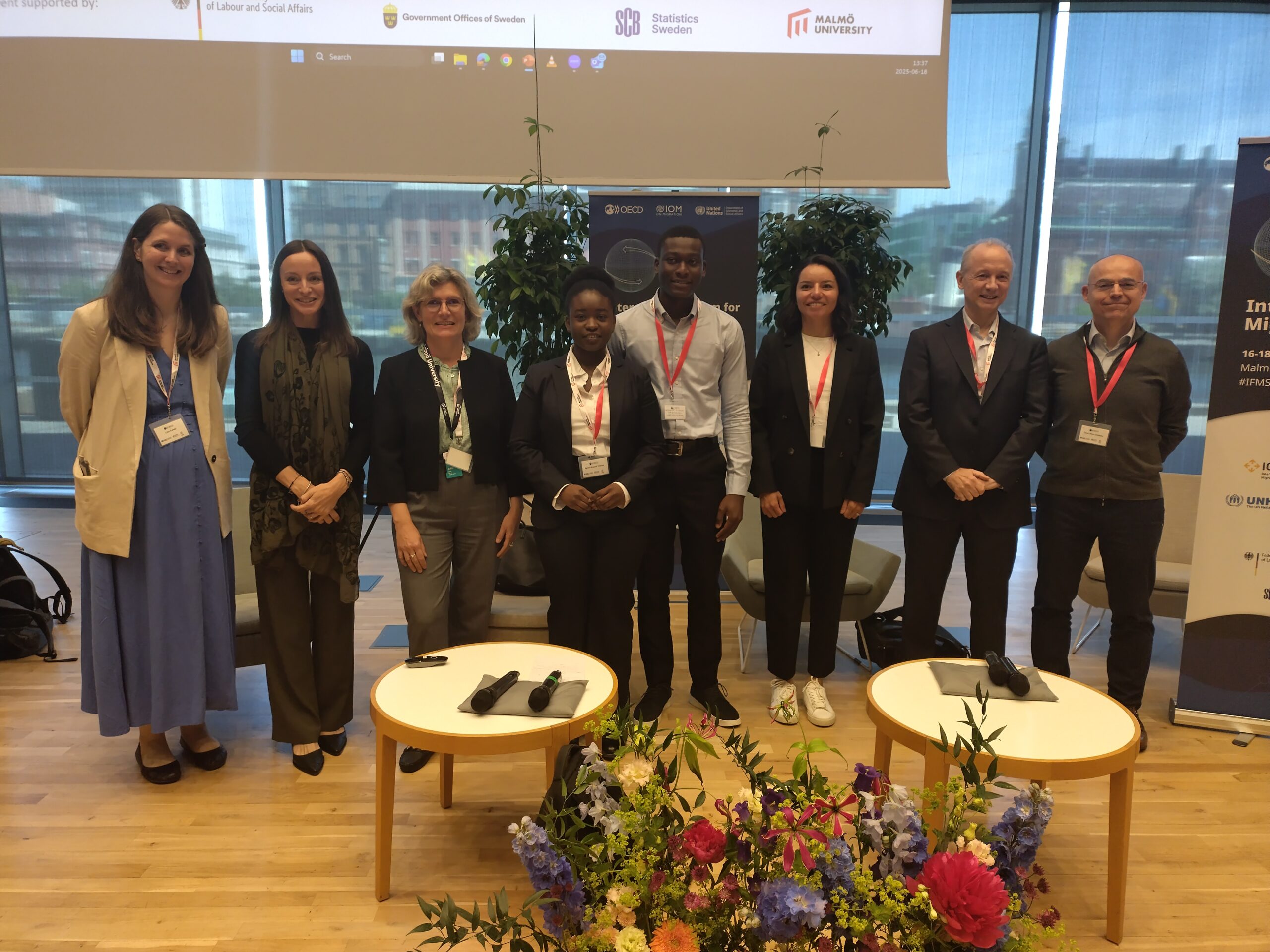
In June, IDAC headed to Malmö, Sweden, for the 4th International Forum on Migration Statistics (IFMS) – a critical platform for the global community to assess how well we are upholding our commitments to the Global Compact for Safe, Orderly and Regular Migration (GCM).
“Child-specific migration and displacement data continue to be largely missing in contexts around the world,” said Marzia Rango, IDAC’s Coordinator. “Our efforts during IFMS week ensured that policymakers, as well as data producers and users, recognize the severe implications of these data gaps on children’s well-being – and act to correct them.”
IDAC led interventions to advocate for improved collection, analysis and use of data for children on the move, using a coalition-building approach that brought together representatives from national statistical offices (NSOs), academia, NGOs and UN agencies. Throughout IFMS week, IDAC also collaborated closely with expert groups and partners such the Expert Group on Refugee, IDP and Statelessness Statistics (EGRISS), the World Bank/UNHCR Joint Data Center on Forced Displacement (JDC) and the Expert Group on Migration Statistics (EGMS).
Building capacities and co-creating solutions
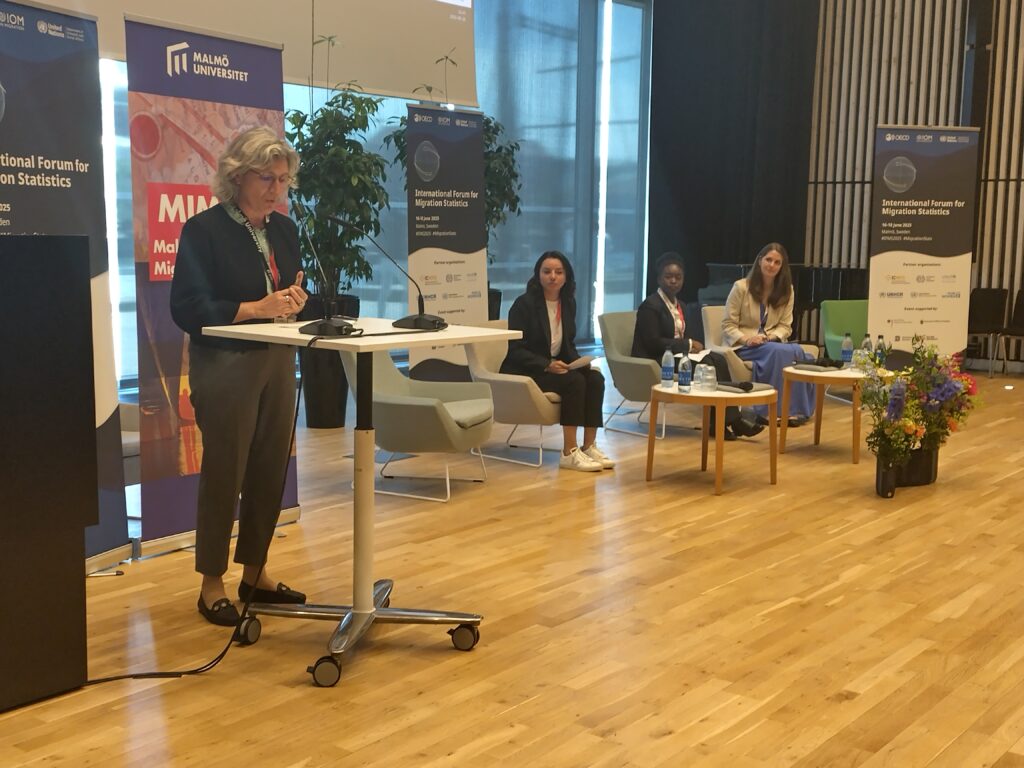
IDAC’s session at the IFMS offered an overview of cross-sectoral good practices and strategies to improve data on migrant and displaced children. The event was opened by Lisa Celebi of the European Union’s Directorate General for International Partnerships (DG INTPA), whose support to IDAC has been pivotal in strengthening statistical systems for children on the move worldwide.
“We need accurate, disaggregated, and timely information to shape effective, rights-based policies and programmes,” Celebi told the IFMS audience. “Better data means better outcomes – whether it’s access to education, health care or protection services. The EU, together with its Member States, is among the largest donors to migration and forced displacement responses globally. Through our partnerships, we fund both direct support to forcibly displaced people and migrants in vulnerable situations, as well as broader efforts to improve data collection and coordination across systems. This includes IDAC.”
Marzia Rango and Sebastian Palmas of the UNICEF-IDAC team presented a summary of recent IDAC initiatives, including the new Indicators for Children on the Move. The indicators are aligned with key global frameworks for children – including the GCM, the Global Compact on Refugees, the Sustainable Development Goals, the Convention on the Rights of the Child and the OECD indicators on immigrant integration.
“The guidelines are a first step towards a globally comparable understanding of the conditions of migrant and displaced children,” explained Sebastian Palmas, UNICEF Data Specialist. “They are the result of a collaborative effort among the IDAC Secretariat and 25 partner organizations, including NSOs, UN agencies, NGOs such as the Internal Displacement Monitoring Centre and Save the Children, and multilateral bodies such as the African Union.”
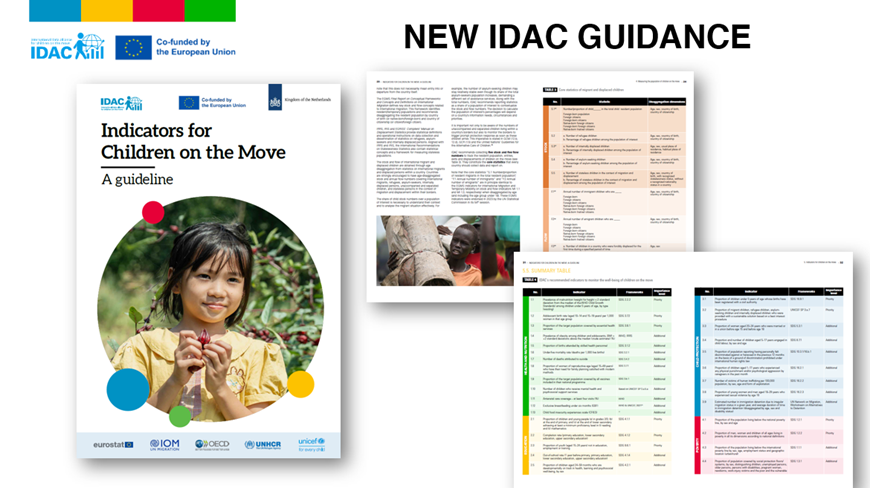
Watch this space – and follow IDAC’s LinkedIn page – to learn about efforts to put the indicators to work!
The University of Bristol’s Ann Singleton spoke of the importance of humanizing data collection and including diverse voices and perspectives – particularly from children themselves – in any data-related activities: “Are children’s voices being heard? Are they part of decision-making processes?” she asked.
Relevant country perspectives came from two IDAC members: the Government of Morocco and the Government of Chile.
- Morocco – Karima Belhaj of the High Commission for Planning (HCP) shared best practices and challenges in collecting data on undocumented and displaced children. She cited examples of specialized surveys that Morocco has conducted on topics including undocumented populations and migrant recruitment costs, in cooperation with various UN agencies. Belhaj also spoke about recent attempts by the Moroccan NSO to involve migrants and refugees themselves in data collection efforts to enhance the reliability of the data and build communities’ trust in the process.
- Chile – Julibeth Rodríguez León of the National Statistics Institute (INE) offered a snapshot of her country’s approach to improving international migration statistics, particularly for children and adolescents. “Learning from other NSOs’ practices has been very useful in our experience: For instance, we worked closely with Uruguay’s National Institute of Statistics to improve our use of administrative records and learn more about integration of census data with administrative records.” Using records of school enrolment, INE produced estimates of the country’s undocumented child population – evidence that directly informed a government decree granting residence permits to undocumented children.
Several critical issues were raised during the Q&A, such as strategies to adapt global-level data collection efforts to specific national contexts and the long-term sustainability of national capacity-building activities to produce child-specific statistics. Panellists stressed the fundamental importance of national ownership, the possibilities of tailoring the IDAC guidelines on child-specific indicators to national priorities, and how efforts to enhance data capacities should be demand-driven and responsive to countries’ policy needs.
Open data + innovation = Actionable insights for children
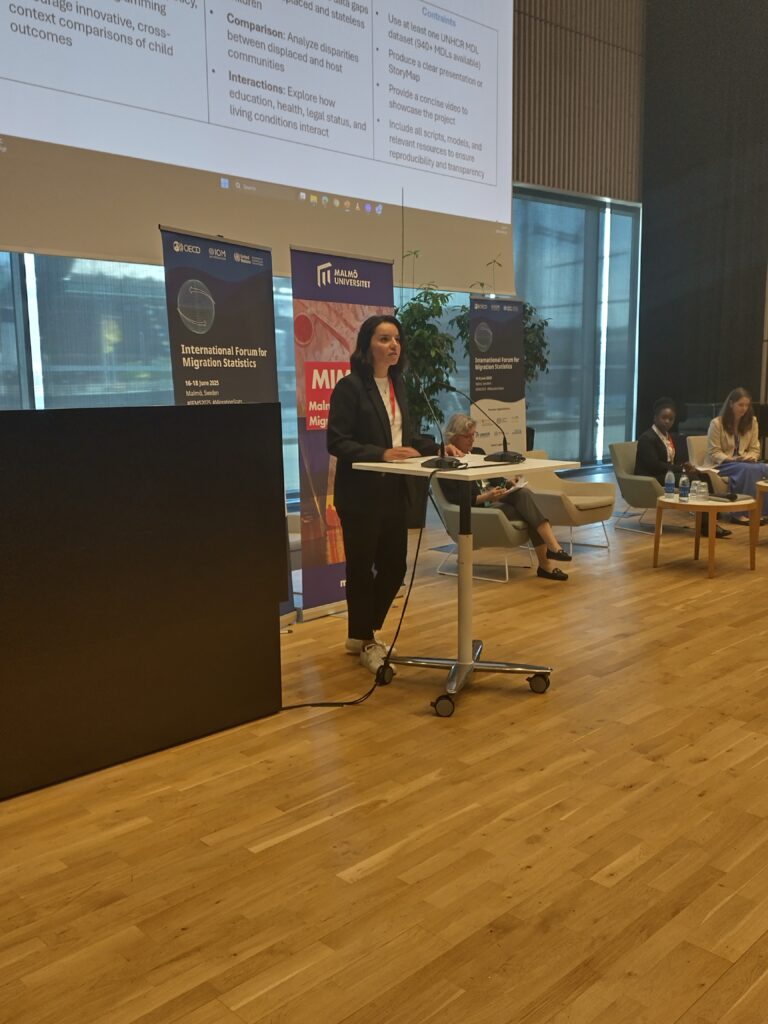
After a highly competitive process and rigorous evaluation by a panel of expert judges, the winners of the IDAC Datathon 2025 were announced at the IFMS. The two winning teams, Craic and Data for Hope, presented their projects on the global forum’s final day.
Co-organized by IDAC Secretariat members OECD and UNHCR, the Datathon challenged participants to use publicly available data from the UNHCR Microdata Library (MDL) to address one of the most pressing issues in the migration statistics space: how to leverage available data to derive deeper insights into the lives of displaced and stateless children and drive action on their behalf.
Winners of the IDAC Datathon 2025
Craic
Participants: William Paja, Matt Murtagh-White, Wooyung Jung
Project: The UNified Model – Predicting Education Outcomes for Displaced Children in Data-Scarce Contexts
Team Craic developed a scalable geospatial machine learning model to estimate school enrollment among displaced children in Iraq. Drawing on both public data and UNHCR microdata, their analysis revealed crucial barriers to education – including child labour, gender disparities, economic hardship, and limited access to services. The model’s adaptability to other displacement settings makes it a powerful tool for targeting interventions and shaping data-driven advocacy.
🔗 Report | Video Presentation | Code Repository
Data for Hope
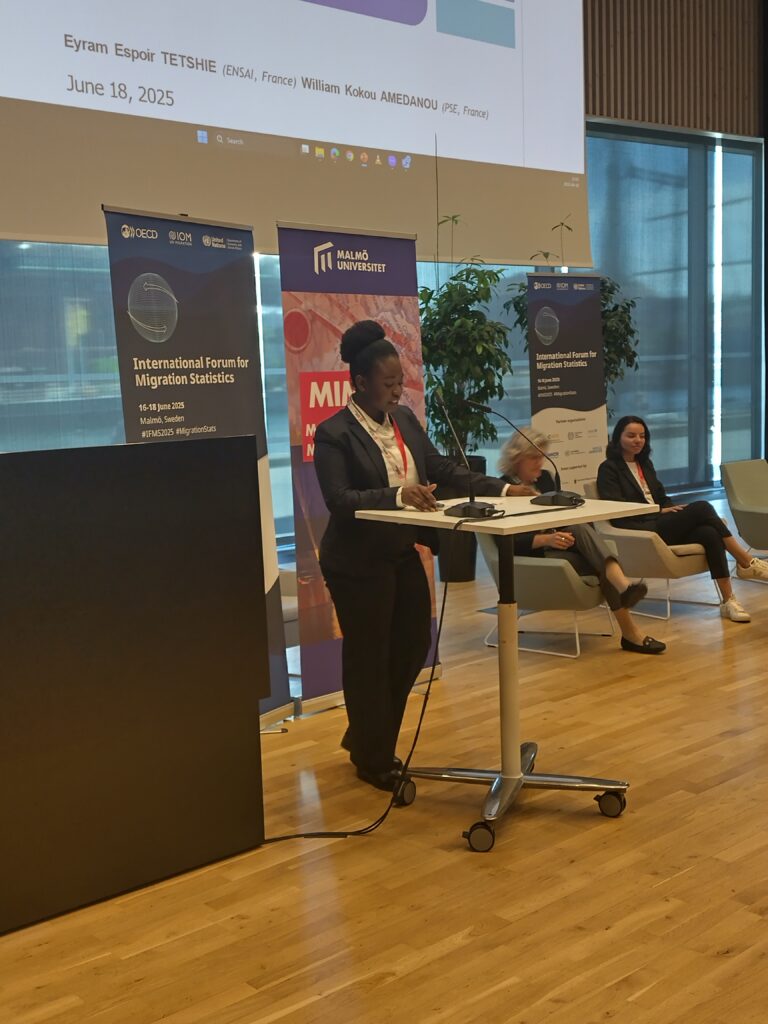
Participants: Eyram Espoir Tetshie, William Amedanou
Project: Multidimensional Vulnerabilities and Child Health – Evidence from Displaced Households in Uganda
This team constructed a composite index to assess child health vulnerability within refugee settlements in Uganda. Using clustering and machine learning techniques, they identified cross-cutting risk factors affecting health, education, protection, and basic services. Their work lays a foundation for targeted, multisectoral interventions aimed at the most at-risk children.
🔗 Documentation | Video Presentation | Code Repository
The IDAC Datathon 2025 demonstrated that when provided with the right tools, access to data and a challenge with purpose, innovators across sectors can generate actionable insights to benefit children on the move.
Congratulations once again to Craic and Data for Hope – and sincere thanks to all participants for advancing data for children on the move!
Mapping integration experiences in Europe
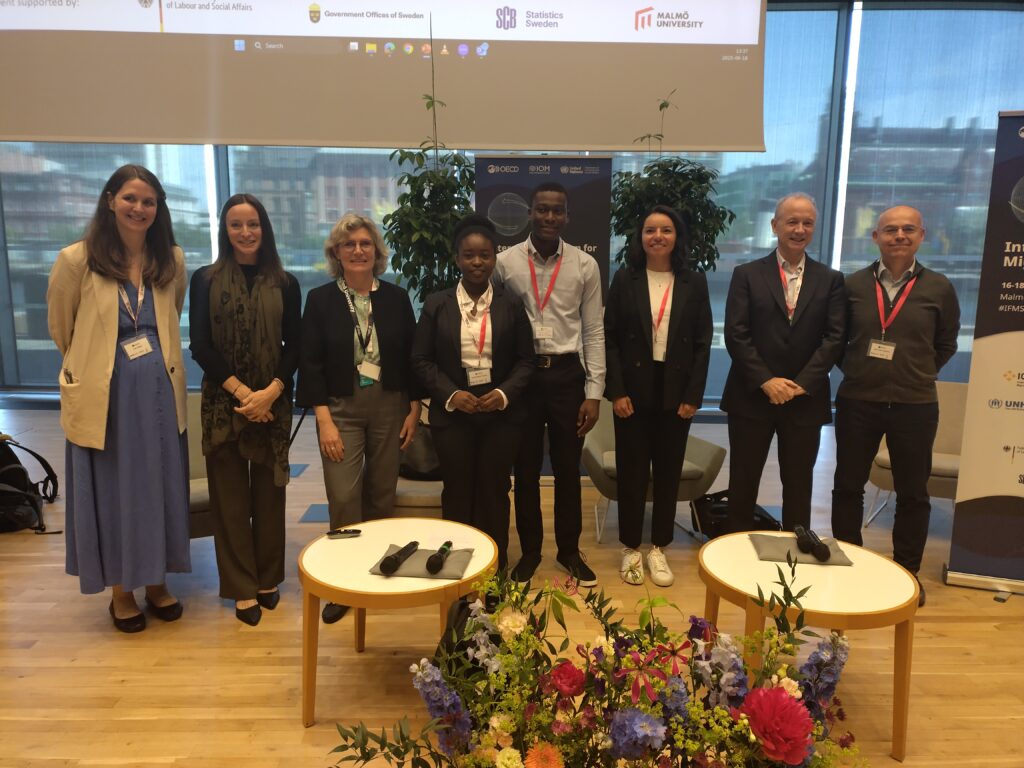
Children were also the focus of a compelling parallel session led by the Chair of IDAC’s Working Group 1, Apostolos Kasapis of Greece’s Hellenic Statistical Authority. It brought together researchers, statisticians and civil society to explore strategies for mapping the educational and social integration of migrant and refugee youth.
Inmaculada Serrano of the Spanish National Research Council described the IMMERSE Dashboard of Indicators, which provides a first mapping of migrant and refugee children’s integration across six European countries (Belgium, Germany, Greece, Ireland, Italy and Spain). Notably, the dashboard was co-created with children and stakeholders, ensuring a child-centred, inclusive approach.
Melissa Randall, Head of Migration Outputs at the United Kingdom’s Office for National Statistics, spoke about the need to understand international student migration levels in light of students’ economic contributions to society. She described efforts to use visa information from the UK to determine students’ trajectories, with a cohort analysis finding that students are now more likely to stay longer and transition to work visas compared to pre-2020 (before the COVID-19 pandemic).
Cinzia Conti, Senior Researcher at ISTAT, shared research that explored individual and family factors influencing the educational choices of second-generation students, with a particular focus on access to STEM education. The study found that both gender and citizenship significantly shape these trajectories.
Yui Mutumol of Save the Children Thailand showcased how digital technologies can help ease administrative barriers that migrant families face in securing their right to legal identity. Mutumol described pilot project ID4ED, which is supporting the enrolment of Myanmar migrant children in Thai schools with the help of accessible, government-verified information produced in a child-friendly format.
IDAC looks forward to continued engagement at national, regional and global forums in 2025 and beyond on behalf of children on the move.