“If you don’t tell the story of your data, people will naturally create their own story around it.” – Rob McNeil, University of Oxford
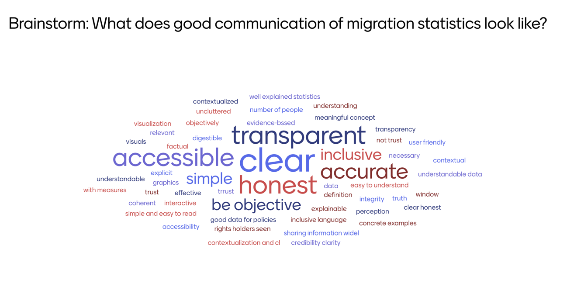
With millions of children on the move around the world – many of them in urgent need of stronger protection – the demand for migration statistics to guide policymaking has never been greater. But producing statistics and evidence alone isn’t enough to safeguard the rights of the world’s most vulnerable – they must also be communicated clearly and ethically in order to be translated into concrete actions that meaningfully improve people’s lives.
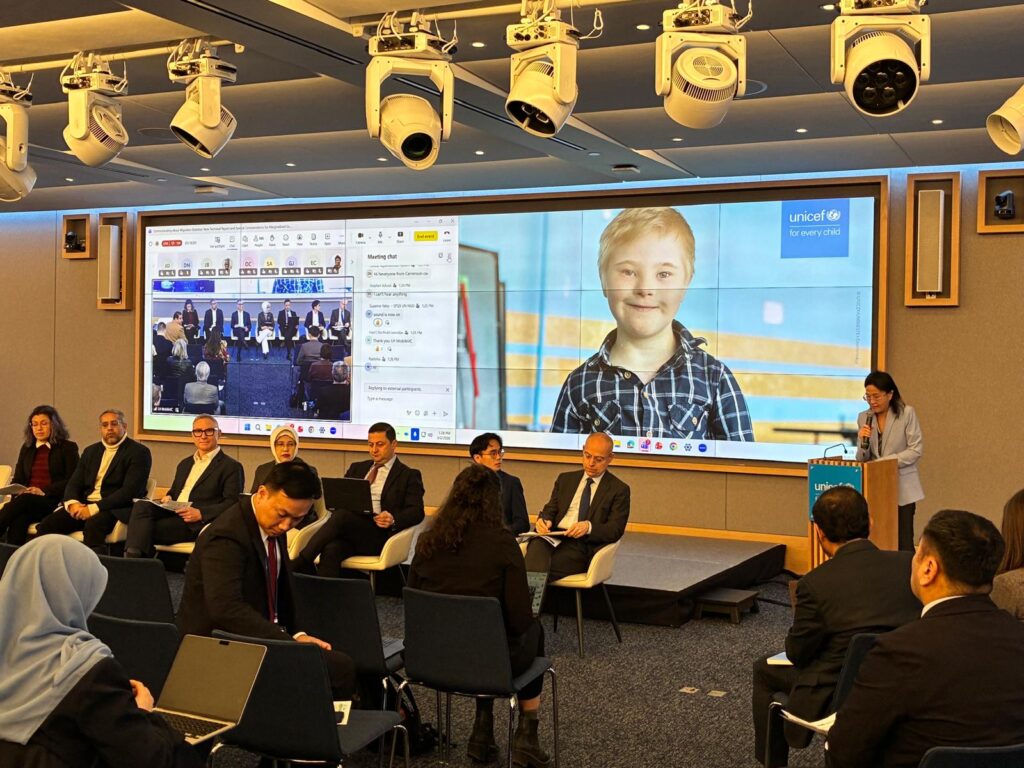
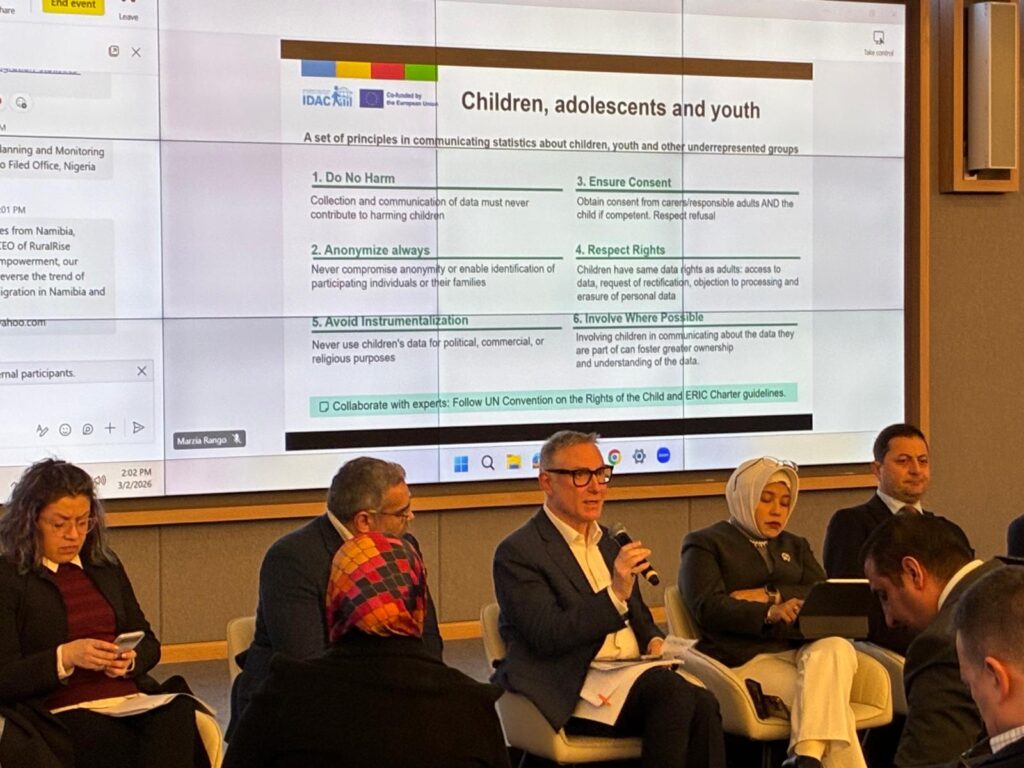
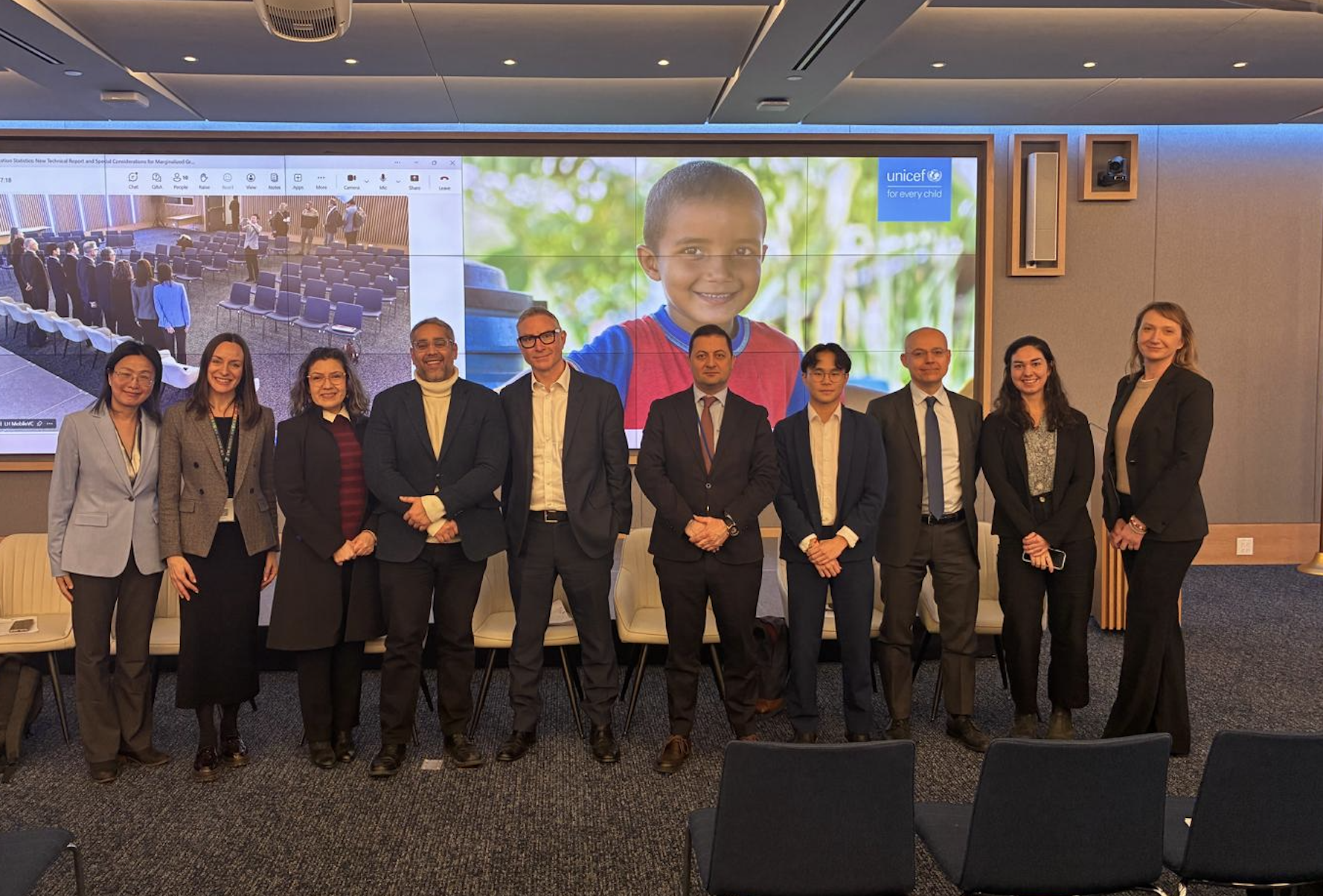
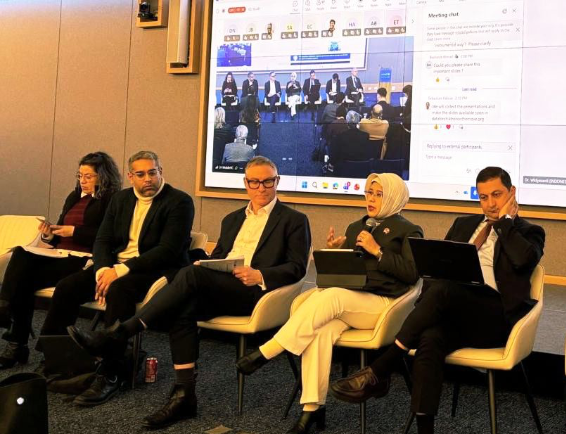
IDAC addressed this critical topic at the 57th Session of the United Nations Statistical Commission (UNSC), where it convened a cross-sectoral panel of experts, including representatives from three national statistical offices and youth. Building on key insights and tools from a new technical report, Communicating about Migration Statistics, a joint effort between IDAC, the United Nations Statistics Division (UNSD) and the University of Oxford’s Centre on Migration, Policy and Society (COMPAS), the discussion illustrated the need for responsible communication of migration and displacement statistics, while also providing practical strategies to achieve this.
Scroll down or click here to watch the full session.
Event presentations: PPT slides.
Communicating in an information-saturated age
UNICEF’s Chief Statistician, João Pedro Azevedo, opened the session by stressing the timeliness of this topic in an era where artificial intelligence is increasingly mediating how people absorb information and official statistics. “Behind every statistic is a human story,” he reminded the audience. “When communications are done right for the most vulnerable, outcomes improve for everyone on the move.”
Maria Isabel Cobos, Statistician at UNSD and co-author of the report, noted that in an environment where “it is no secret that migration is becoming a polarizing phenomenon”, effective communication about migration statistics has become more important than ever. Cobos situated the new technical work as complementary to the globally endorsed UN Recommendations on Statistics of International Migration and Temporary Mobility – which, for the first time, include a section on ‘Statistics as storytelling’, reflecting the global statistical community’s growing recognition of the importance of communication.
Co-authors Rob McNeil and Peter Walsh from the University of Oxford dug into the report findings. McNeil reiterated the importance of storytelling as a tool to contextualize data and engageusers, emphasizing the fundamental role that NSOs must play in “structuring the information we provide for people – with narrative, with explanation”.
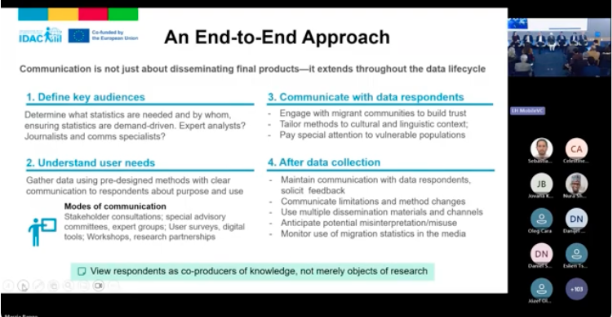
Walsh highlighted the need to engage audiences at every stage of the statistical lifecycle, from defining key audiences and identifying user needs before data collection to disseminating results and maintaining contact with key audiences afterwards. This end-to-end approach views respondents as active co-producers of knowledge, rather than just objects of research.
Perspectives from the field
In Serbia, gender- and age-sensitive data – including on IDAC’s recommended indicators – have been integrated into the country’s annually produced Migration Profile. As Danijela Nedic, Assistant Commissioner for Serbia’s Commissariat for Refugees and Migration, explained, the Commissariat’s new communication strategy aims to bring visibility to this work while “building trust, breaking down stereotypes and fostering understanding”.
Indonesia’s efforts to drive inter-ministerial collaboration have been critical to strengthening migration governance, according to Amalia Adinggar Widyasanti, Chief Statistician of Indonesia’s National Statistical Office. Widyasanti explained how this cooperation underpinned development of Indonesia’s Synergy on International Migration Data (SDMI), which consolidates data from a variety of sources into a unified and interoperable system. A new Data Hub, which includes a data storytelling section, is currently under development to make this information accessible to the general public. “Data is not only about the numbers,” Widyasanti stressed. “We have to be able to tell a story from the data that we provide.”
Georgia’s commitment to ethical, inclusive and accessible communication on migration was highlighted by Gogita Todradze, Executive Director of Georgia’s National Statistics Office, who outlined the NSO’s comprehensive migration communication strategy. This includes regular publication of migration statistics with clear analysis and context, coordinated inter-agency data and public messaging through the State Commission on Migration Issues (SCMI), and a dedicated website featuring interactive data visualizations and tools – including a child-friendly Statistics for Children and Adolescents Portal as a prime example of tailoring communication to diverse audiences.
The collective path forward
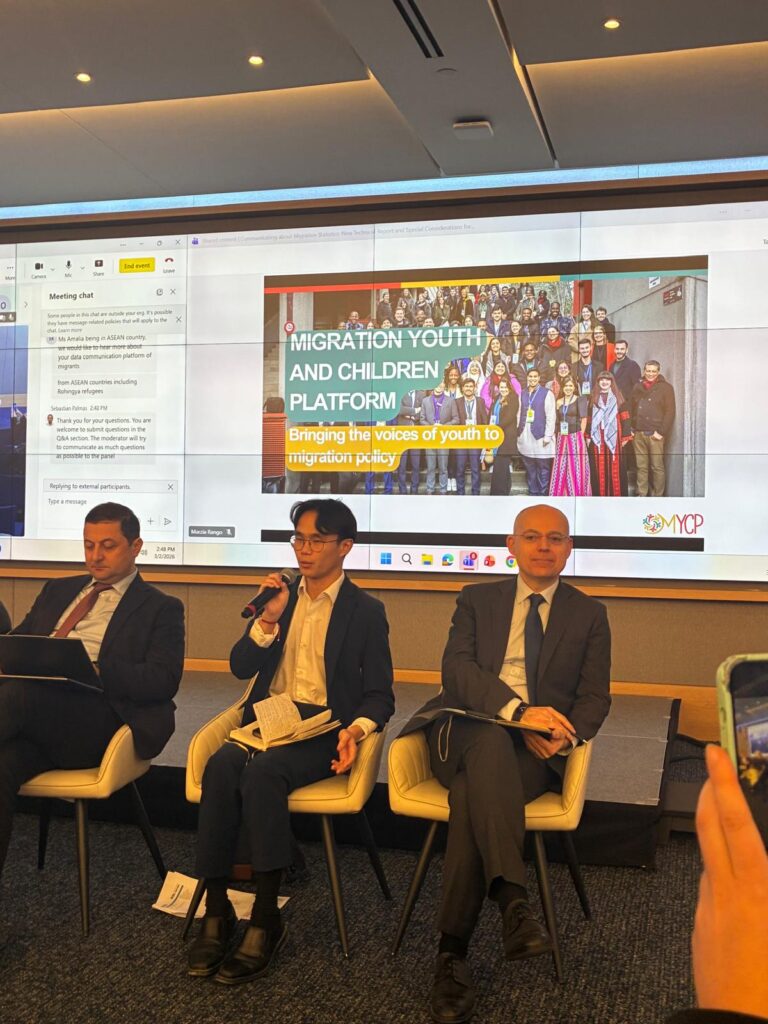
Centering meaningful engagement and participation in ethical communication of statistics, Jonathan Lam, youth activist, International Officer at the Migration Youth and Children’s Platform (MYCP) and the child of Vietnamese refugees, underscored the need for human rights-based and inclusive approaches to data collection and research, particularly for youth in the move. He concluded with a final ask to data producers and researchers:
“While we have different reports and data collection and research processes, it’s so important that we’re sharing that back with youth communities and that they can be accessed bymigrant populations. We don’t just want them to just be individuals in a survey – we also want them to be collaborators.”
UNCHR’s Chief Statistician and IDAC Secretariat member Tarek Abou Chabake, closed the session by emphasizing our collective role in ensuring IDAC’s new report would become a “success story” moving forward. “We cannot do this alone,” he told the audience. “We all have to work hand in hand, in partnership, to make this happen.”